Polymesh. Future-proof RWAs with a purpose-built blockchain
Polymesh is the first public permissioned blockchain built specifically for regulated assets and security tokens. It was created by the Polymath team after years of working with Ethereum-based tokenization and recognizing that general-purpose blockchains couldn't meet the compliance, identity, and settlement needs of institutional finance.
My work spanned the full product ecosystem: two versions of Token Studio, the Governance app, the Polymesh Wallet browser extension, the POLY to POLYX token bridge, staking, and the brand identity including a refined logo and comprehensive branding guidelines.

Problem
Polymesh was a purpose-built Layer 1 blockchain, but the products sitting on top of it still needed to feel approachable to people who had never interacted with a blockchain before.
Token Studio was functional but built around developer assumptions. Governance tooling needed to make on-chain proposals and voting legible to token holders who think in shareholder meetings, not Polymesh Improvement Proposals. The wallet extension had to handle key management, identity verification, transaction signing, and balance monitoring in a format that fits inside a tiny browser popup. Staking needed to be clear enough that POLYX holders could confidently nominate node operators and understand reward mechanics without a crypto background.
When Polymesh launched its own chain, existing POLY holders on Ethereum needed a clear and trustworthy path to migrate their tokens to POLYX. A failed or confusing bridge experience would have stalled network adoption from day one. And because Polymesh was positioning itself as the institutional alternative to Ethereum for tokenized securities, every touchpoint needed to project trust and maturity. The visual identity and brand system had to match that ambition.
My role
I started as the sole designer and eventually led other product designers as the scope expanded.
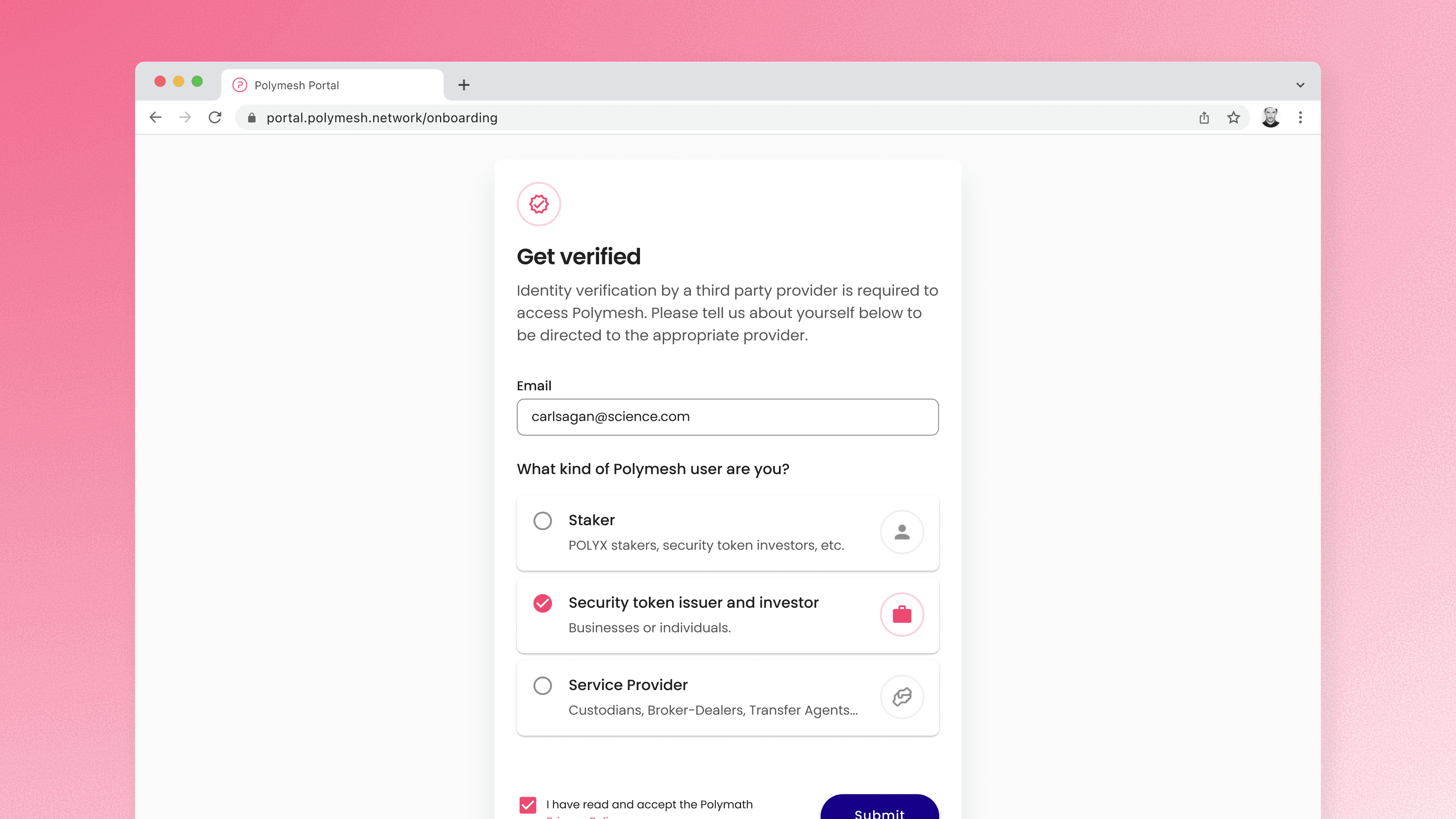
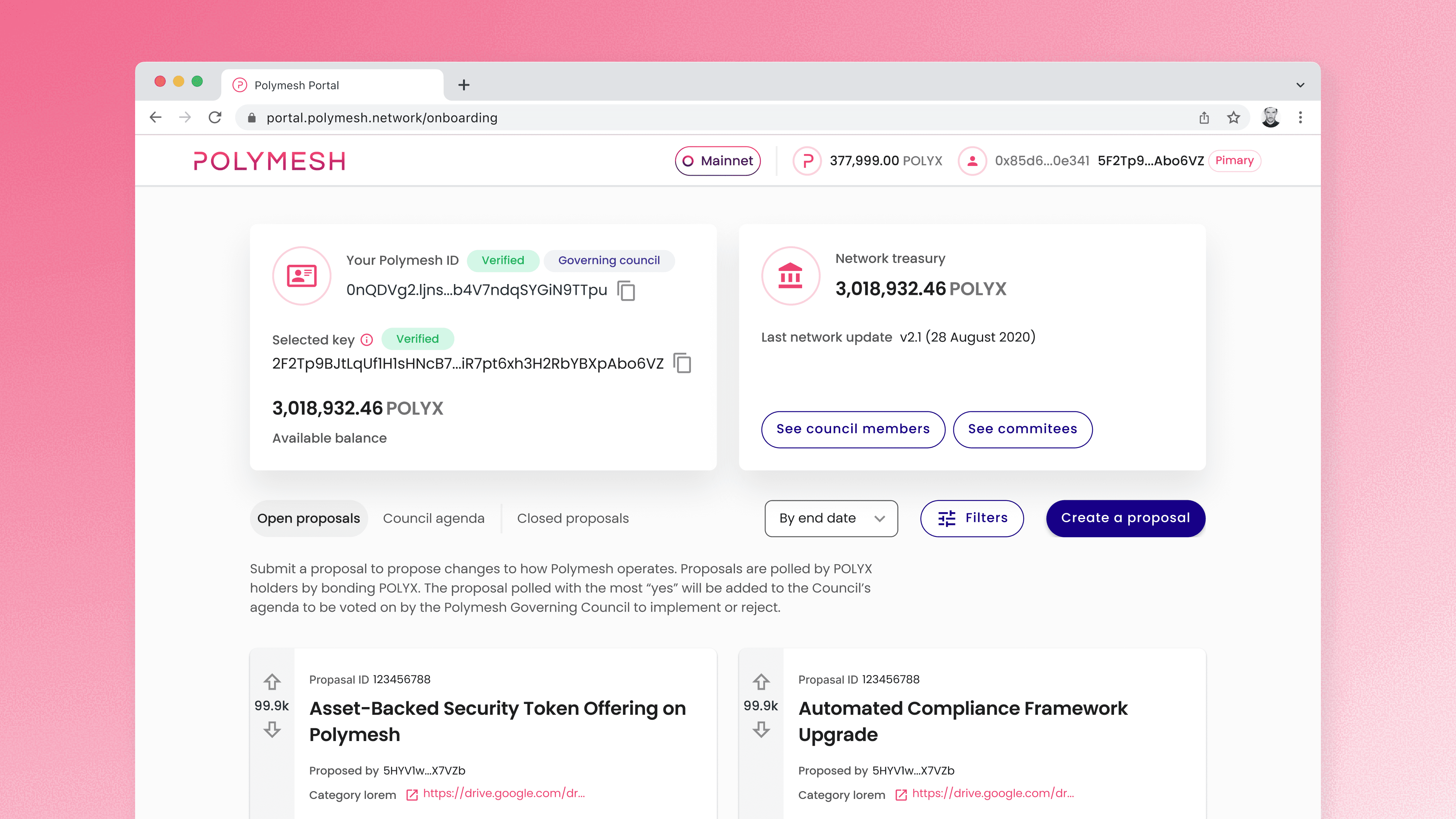
On Token Studio, I designed both versions end to end. V1 established the core token issuance and management flows. V2 was a full rethink, bringing in no-code token creation, better compliance configuration, and a cleaner information architecture for non-technical issuers. For Governance, I designed the interface that let POLYX holders participate in on-chain decision-making: viewing proposals, understanding their impact, staking support, and tracking voting outcomes. I also designed the staking experience, making it straightforward for token holders to nominate node operators, bond their POLYX, monitor rewards per era, and understand the mechanics of the nominated proof-of-stake system without needing to read protocol documentation.
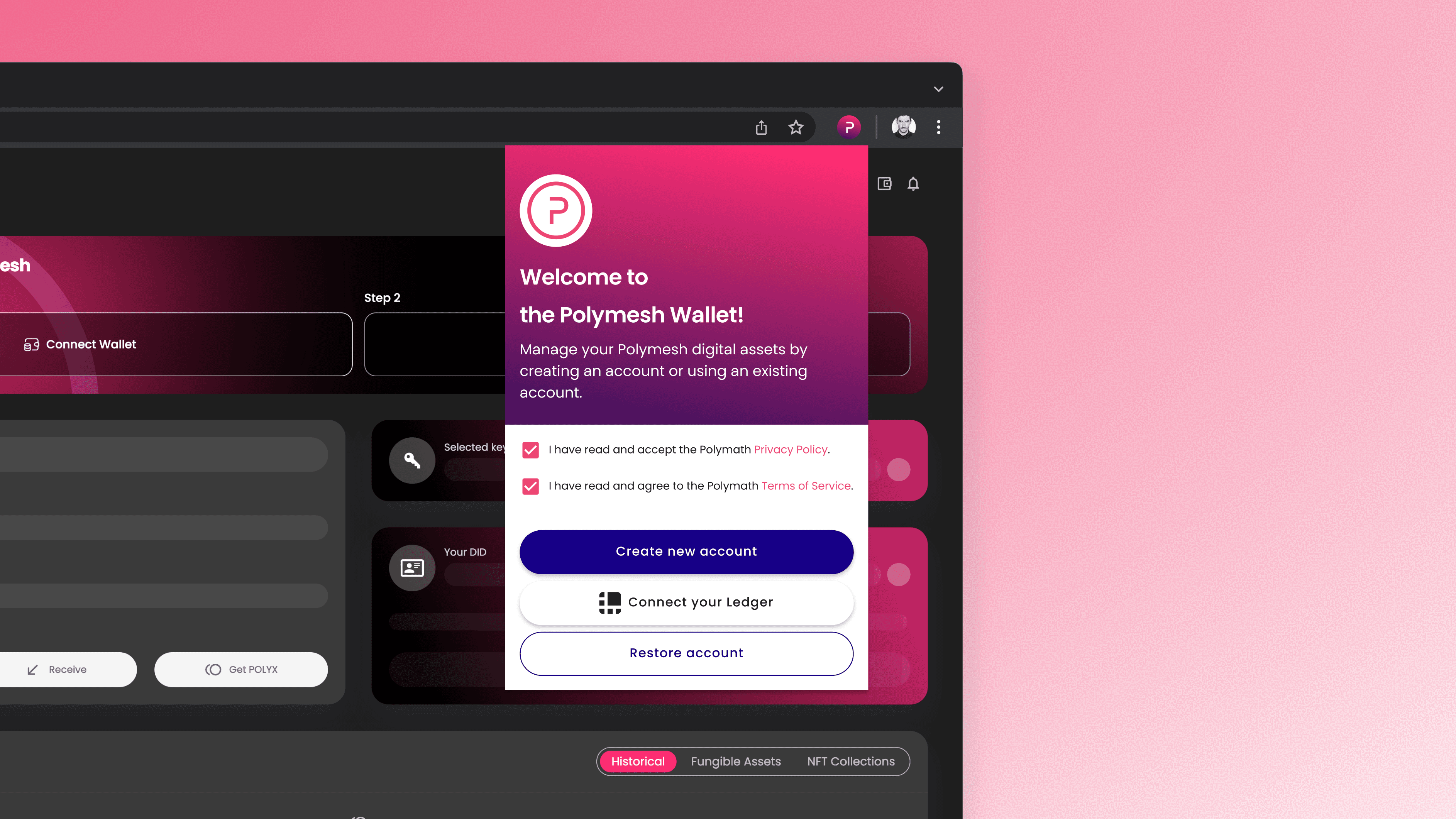
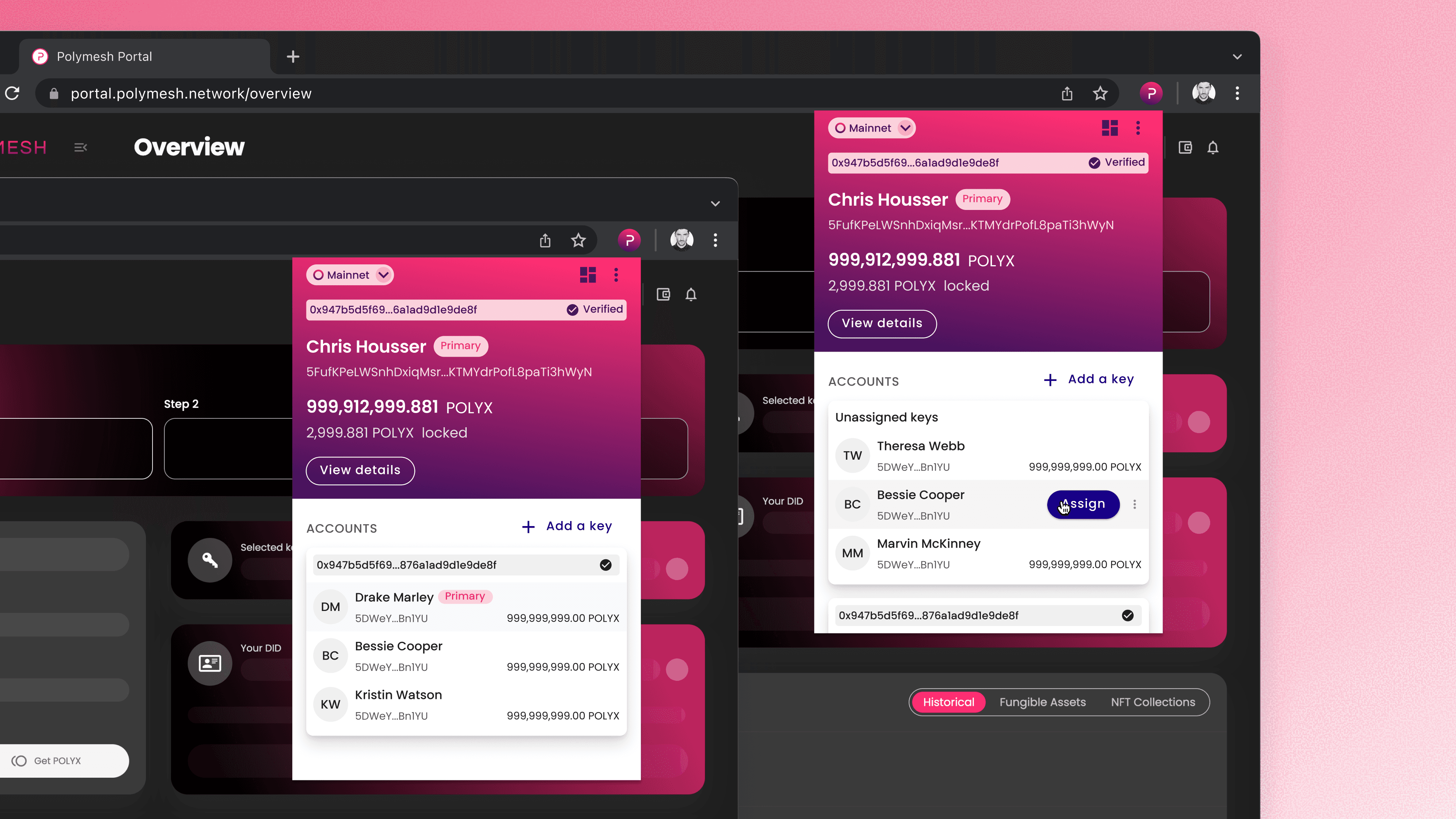
The Wallet Extension was a constrained design problem. I had to fit account creation, key management, identity verification, POLYX balance monitoring, and transaction signing into a Chrome extension with very limited screen real estate while keeping it secure and understandable.
I also designed the POLY to POLYX bridge, the cross-chain migration flow that let existing Ethereum-based POLY token holders convert to native POLYX on the new Polymesh chain. This was a high-stakes flow where any confusion could mean lost funds, so clarity and trust signals at every step were non-negotiable.
On the brand side, I led the evolution of the Polymesh visual identity. That included refining the logo to better communicate the blockchain's institutional positioning and creating branding guidelines that ensured consistency across the website, product interfaces, documentation, and partner materials.
Outcomes
Token Studio v2 shipped as the primary self-service interface for creating and managing tokens on Polymesh, and eventually evolved into what is now the Polymesh Portal, the central hub for all on-chain activity on the network. The Governance app gave the Polymesh community a transparent and usable way to participate in protocol-level decisions, which is critical for a public permissioned chain that relies on active stakeholder engagement. The staking interface enabled token holders to actively secure the network and earn rewards through a process that felt familiar rather than intimidating.
The Wallet Extension became the default entry point for Polymesh users, handling everything from onboarding to daily transaction signing. The POLY to POLYX bridge was used by over 6,000 users to migrate their tokens from Ethereum to the Polymesh chain, with a smooth conversion experience that helped drive early network adoption without support escalations.
The updated brand identity helped Polymesh present itself consistently as an institutional-grade blockchain to partners, regulators, and enterprise prospects. Across these products, I shaped how people actually experience and interact with Polymesh, from their first wallet setup to managing tokenized assets at scale.